
“How big will my puppy get?” is one of the first questions every new owner asks. It matters for practical reasons, like choosing a crate, budgeting for food and planning your home, and it’s simply fun to know. The honest answer is that no method is perfect, but you can make a good estimate by combining a few clues.
This guide explains seven ways to estimate your puppy’s adult size, how growth differs between small and giant breeds, what affects final size, and when to talk to your vet about growth.

The short answer
Your puppy’s adult size depends mostly on genetics, meaning breed and parents. For purebred puppies, the breed standard and the parents’ size give the most reliable estimate. For mixed breeds, a DNA test, the parents’ size if known, and your vet’s assessment are your best tools. Growth charts and calculators can help, but they’re estimates, not promises.
How puppies grow: small vs large breeds
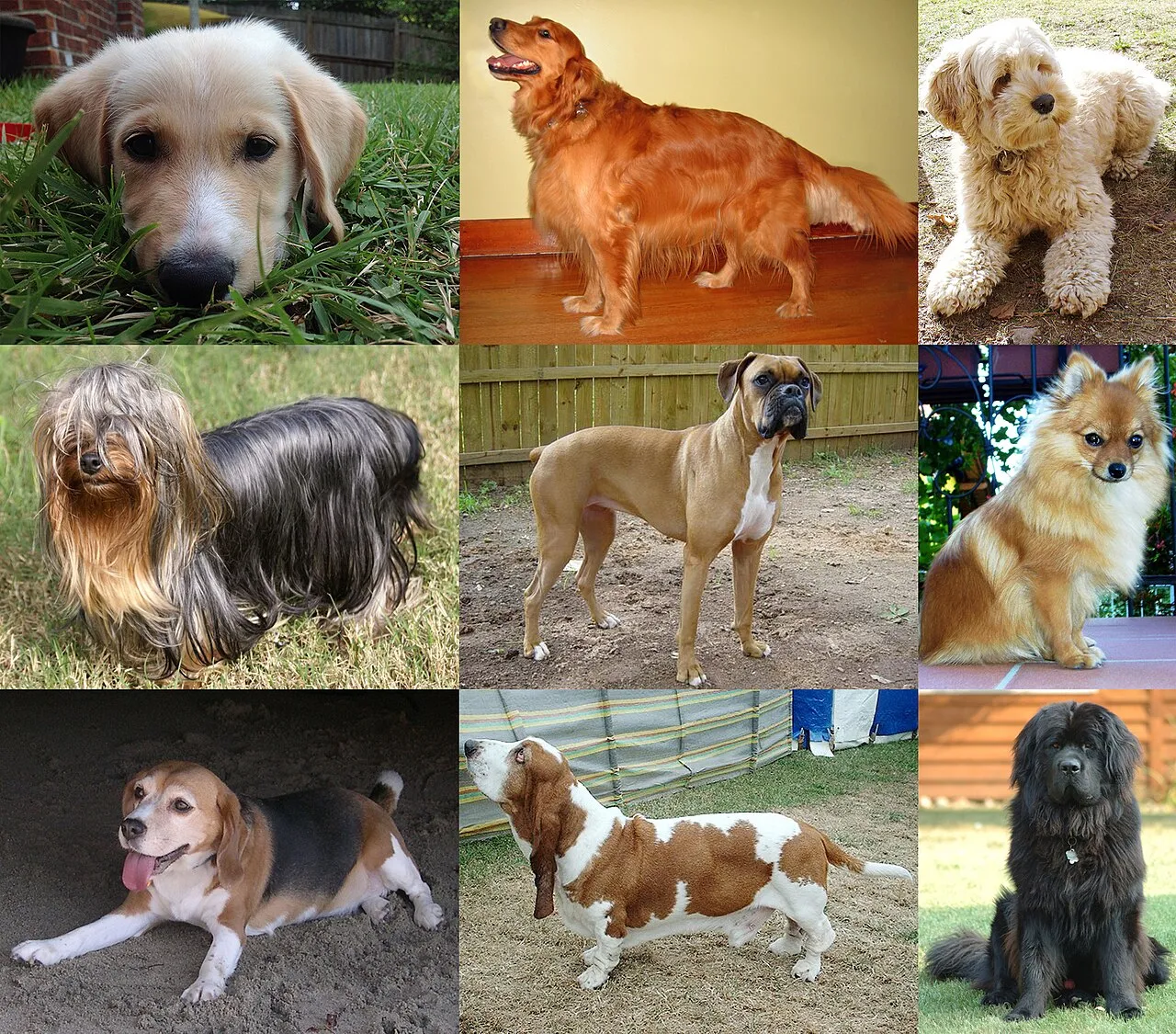
Puppies don’t all grow at the same speed. Small breeds race through puppyhood, while giant breeds take much longer to fill out. According to VCA Animal Hospitals, approximate ages of maturity are:
| Breed size | Examples | Approximate age of maturity |
|---|---|---|
| Small | Chihuahua, Shih Tzu, Cavalier King Charles Spaniel | 6 to 8 months |
| Medium | Beagle, Border Collie, Cocker Spaniel | 9 to 12 months |
| Large | Labrador, Golden Retriever, German Shepherd | 12 to 18 months |
| Giant | Great Dane, Mastiff, Saint Bernard | Up to 24 months |
That’s why a 5 month old Yorkie may be close to adult size while a 5 month old Great Dane still has a long way to go. Read more in our guide on when puppies stop growing.

Growth happens in phases
Most puppies grow fastest in their first few months, then growth slows as they approach adult height. Large and giant breeds often look gangly, with long legs and big paws, before they fill out in the chest and muscle. Our puppy development stages guide walks through each phase.
7 ways to estimate how big your puppy will get
1. Check the breed standard
For purebred puppies, the breed standard gives a typical adult height and weight range. Kennel clubs such as the AKC list these on each breed page. Remember that males are often larger than females, and individual dogs can fall outside the range.
2. Look at the parents
The parents are one of the best clues. A puppy’s adult size often falls somewhere near the size of its parents, especially the same sex parent. Ask your breeder for the parents’ heights and weights. If you can meet them, even better.
3. Ask about previous litters
Breeders who have bred the same pair before can often tell you how big earlier puppies grew. This is useful real world data.
4. Use a growth chart
Growth charts compare your puppy’s weight at a given age with typical growth curves. In 2017, researchers published evidence based growth standard charts for dogs in PLOS One. They used bodyweight records from more than six million young dogs seen at a large network of US veterinary hospitals, focusing on healthy dogs that stayed in ideal body condition. The study found that growth could be described well using a handful of size categories rather than separate curves for every breed.
Growth charts work like a child’s height chart. They’re most useful for tracking whether your puppy is following a steady curve, rather than predicting an exact final number. See our puppy growth chart to track your puppy by age.
5. Try an online puppy weight calculator
Puppy weight calculators ask for your puppy’s age, current weight and breed size, then project an adult weight. They can give you a ballpark, but accuracy varies, especially for mixed breeds and very young puppies. Use the result as a rough guide and check it against other methods.

6. Get a DNA test for a mixed breed
If you don’t know your puppy’s background, a canine DNA test can identify the breeds in the mix, which gives you an idea of the likely size range. The AKC explains how dog DNA tests work and what they can tell you. Mixed breed puppies can take after either parent, so expect a range rather than one number. Learn more in our mixed breed puppies guide.
7. Ask your vet
Your vet sees many puppies and can often give a sensible estimate based on age, weight, frame and breed type. They can also check that your puppy’s growth is healthy. Bring your puppy’s weight records to each visit.
Do paw size and other clues predict size?
Paws
Many people believe big paws mean a big dog. There’s a little truth to it, since large breed puppies often have big, chunky paws. But paw size varies a lot between breeds and individual puppies, and it isn’t a reliable predictor on its own.

Loose skin
Some people say a puppy with lots of loose skin has room to grow. Again, this varies a lot by breed. Breeds like Shar Pei and Bloodhound have loose skin as adults, so it doesn’t tell you much.
Rules of thumb
You’ll find simple rules online, like doubling a puppy’s weight at a certain age. These rules can sometimes land close, but they don’t account for breed size, sex or growth pattern. Use them for fun, and rely on breed, parents and vet advice for planning.
Age clues
If you’re not sure how old your puppy is, estimating size gets harder. Teeth are one of the best age clues. Our guide on how to tell how old a puppy is explains what to look for.
What affects how big your puppy will get?
Genetics
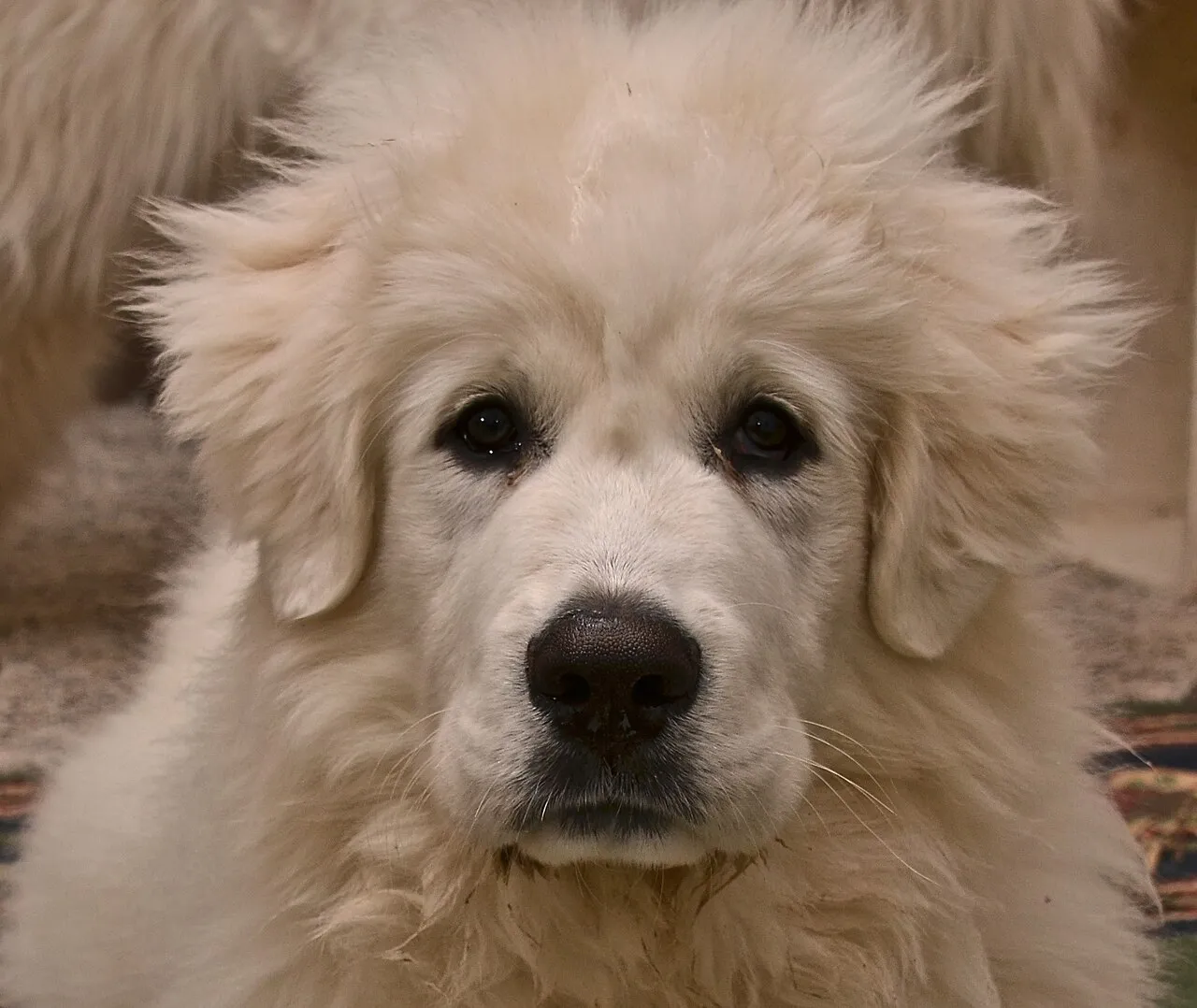
Genetics set the range. Breed, parents and the mix of breeds in a mixed breed puppy have the biggest influence on adult size.
Sex
In many breeds, males are larger and heavier than females. Breed standards often list separate ranges for each.
Nutrition
Good nutrition lets a puppy reach its genetic potential, but overfeeding won’t make a puppy grow taller. It will make it heavier, which can harm growing joints. Large and giant breed puppies especially need food designed for their growth needs. See how much to feed a puppy and when to switch puppy food.
Health
Parasites, illness and poor nutrition can slow growth. Regular vet checks, deworming and vaccines help your puppy grow normally.
Neutering and spaying
The 2017 growth chart study found neutering before about 37 weeks was linked to a slight upward shift in growth, and later neutering to a slight downward shift. The researchers noted these shifts were small compared with normal differences between individual dogs. If you have questions about the timing of neutering for your puppy’s breed and size, talk to your vet.

Is my puppy growing normally?
The best way to judge healthy growth isn’t just the number on the scale. Vets use a body condition score to check whether a dog is underweight, ideal or overweight. WSAVA offers a simple body condition score chart for dogs.
A puppy in ideal condition usually has:
- Ribs you can feel easily without pressing hard, but not see clearly
- A visible waist when viewed from above
- A slight tuck in the belly when viewed from the side
Weigh your puppy regularly
Weigh your puppy every couple of weeks and write it down. Small puppies can be weighed by stepping on a scale holding them, then subtracting your own weight. Many vet clinics are happy for you to pop in and use their scale.
When to see your vet
Talk to your vet if your puppy:
- Stops gaining weight or loses weight
- Looks very thin or has a swollen belly
- Seems much smaller than littermates or the expected breed size
- Gains weight very fast or is becoming overweight
- Limps, has swollen joints, or seems stiff
These can be signs of parasites, a health problem or a diet issue, so it’s best to get them checked.

Planning for your puppy’s adult size
Knowing roughly how big your puppy will get helps you plan ahead:
- Crates. Buy a crate for the adult size and use a divider while your puppy is small.
- Collars and harnesses. Expect to replace these several times as your puppy grows.
- Beds. A large adult bed may be wasted on a tiny puppy, so consider a cheaper bed for now.
- Food budget. Big dogs eat more, which adds up over a lifetime.
- Exercise. Large breed puppies need controlled exercise while their joints develop. See our puppy walking chart by age.
- Home and car. Make sure you’ll have room for your dog as an adult.

Size considerations by breed type
Small breeds
Small breed puppies grow quickly and often reach adult size before their first birthday. They need small, frequent meals early on. Browse our small puppy breeds guide for size friendly options.
Large and giant breeds
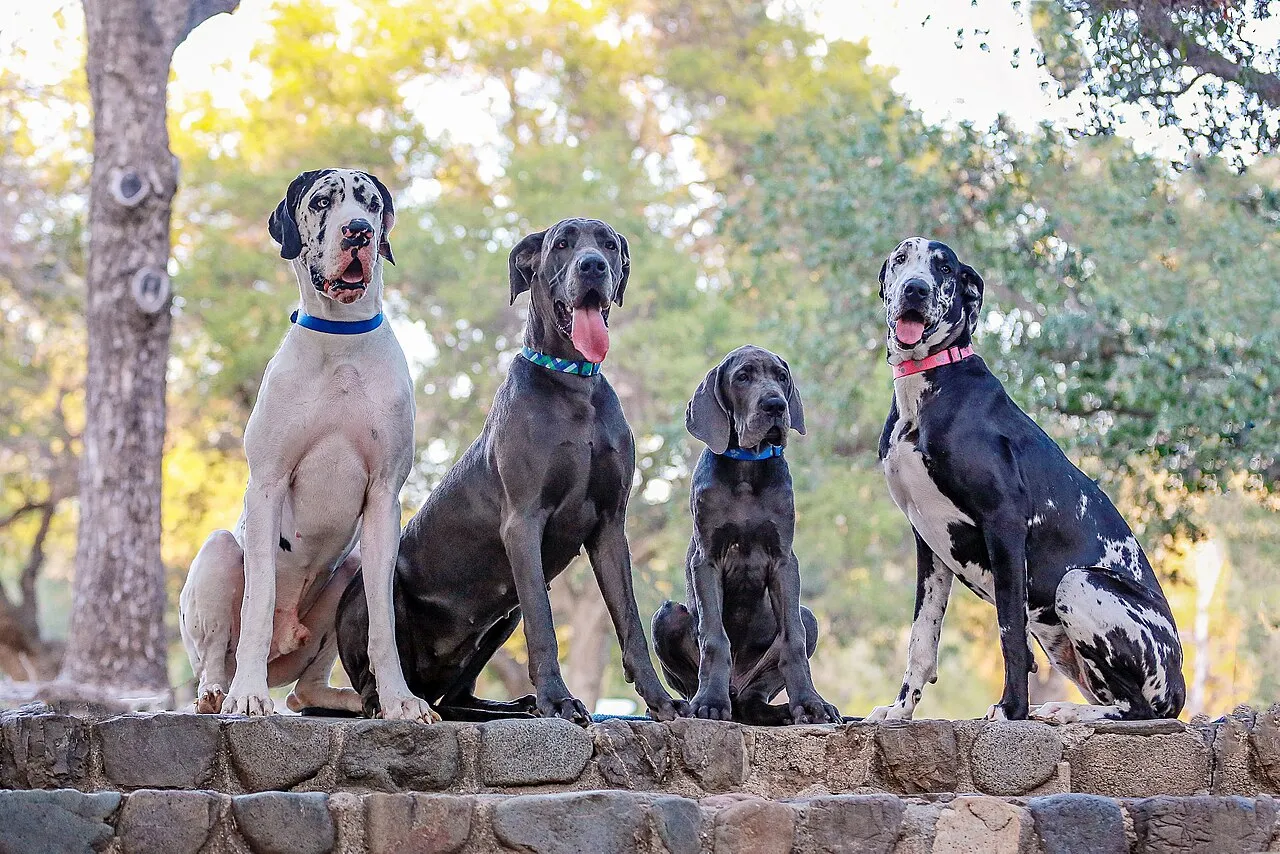
Large and giant breeds grow for longer and are more prone to joint problems if they grow too fast. Feeding the right diet and avoiding extra weight is key. See our large puppy breeds guide.
Medium breeds
Medium breeds sit in the middle. Many reach close to adult height by their first birthday but keep adding a little muscle afterward. Medium sized mixes can be the hardest to predict, because they may take after a smaller or larger parent. Keep tracking weight and body condition, and adjust food as growth slows.
Females and heat
Female puppies of small breeds may have their first heat cycle before they’re fully grown, while large breeds often come into heat later. Read when puppies go into heat for more.
Frequently asked questions
How can I tell how big my puppy will get?
Check the breed standard, look at the parents, track weight on a growth chart and ask your vet. For mixed breeds, a DNA test can give useful clues.
Are puppy weight calculators accurate?
They give a rough estimate. They tend to be more useful for purebred puppies and older puppies, and less reliable for young mixed breeds.
Do big paws mean a big dog?
Not always. Big paws are common in large breed puppies, but paw size alone isn’t a reliable predictor.
When will my puppy reach full size?
Small breeds usually mature by around 6 to 8 months, medium breeds by 9 to 12 months, large breeds by 12 to 18 months, and giant breeds may take up to 2 years.
Will my puppy be as big as its parents?
Often similar, especially the same sex parent, but every puppy is different. Mixed breed puppies can vary even more.
Can I make my puppy grow bigger by feeding more?
No. Overfeeding makes puppies heavier, not taller, and can increase the risk of joint problems. Feed a balanced puppy diet in the amounts your vet recommends.
The bottom line
You can’t know your puppy’s exact adult size in advance, but you can get close. Start with breed and parents, track weight on a growth chart, use a DNA test for mixed breeds, and keep your vet in the loop. Above all, focus on healthy, steady growth and a lean body shape. A well fed, well cared for puppy will grow into the size it’s meant to be.
Photo credits
- Five month old black Great Dane puppy lying on the grass: Photo: Eacampbell14 / Wikimedia Commons, CC BY-SA 3.0
- Great Dane puppy and English Bulldog play wrestling: Photo: Canine To Five / Wikimedia Commons, CC BY 2.0
- Collage of nine dogs of different breeds and sizes: Photo: YellowLabradorLooking_new.jpg : *derivative work: Djmirko ( talk ) YellowLabradorLooking.j / Wikimedia Commons, CC BY-SA 3.0
- Young puppy playing on a lawn beside two much larger adult dogs: Photo: Mitch Barrie from Reno, NV, USA / Wikimedia Commons, CC BY-SA 2.0
- Brown puppy licking its large front paw: Photo: Jami430 / Wikimedia Commons, CC BY-SA 4.0
- Close up of a fluffy four month old puppy face: Photo: Aiko, Thomas & Juliette+Isaac / Wikimedia Commons, CC BY 2.0
- White German Shepherd puppy with muddy paws walking on dark ground: Photo: Ildar Sagdejev ( Specious ) / Wikimedia Commons, CC BY-SA 4.0
- Cavalier King Charles Spaniel lying on the grass: Photo: Harold Litwiler from Orcutt/Istanbul, USA / Wikimedia Commons, CC BY-SA 2.0
- Young harlequin Great Dane lying on a patio: Photo: – EMR – / Wikimedia Commons, CC BY 2.0
- Group of adult Great Danes sitting together on a stone ledge: Photo: Vanessa Kay / Wikimedia Commons, CC BY 3.0


