
A Chihuahua puppy is tiny, bold and fragile all at once. Feed small, regular meals to help prevent low blood sugar, protect it from falls and rough handling, and keep it warm when temperatures drop. Train with short, reward-based sessions. Most Chihuahuas weigh no more than 6 pounds as adults.
Quick takeaways
- AKC’s standard calls for Chihuahuas no heavier than 6 pounds and 5 to 8 inches tall.
- Toy puppies can develop low blood sugar if they miss meals, so feed on a schedule.
- Falls from furniture or arms are a real injury risk for tiny puppies.
- Chihuahuas get cold quickly. A sweater and short outings help in winter.
- Positive, consistent training works well. Don’t let cute habits become adult problems.
In this guide
- How big does a Chihuahua puppy get?
- What should a Chihuahua puppy eat?
- How do you keep a tiny puppy safe at home?
- How do you keep a Chihuahua puppy warm in winter?
- Holiday safety for small puppies
- How do you train a Chihuahua puppy?
- What health issues affect Chihuahuas?
- Is a Chihuahua puppy right for you?
- Frequently asked questions
A Chihuahua puppy can fit in a coffee mug and still act like it runs the house. That big attitude in a tiny body is a lot of the breed’s charm. It also means Chihuahua puppies need some extra care that bigger puppies don’t. Here’s how to feed, train and protect your new little one, especially as the weather turns cold and the holidays fill your home with guests.
How big does a Chihuahua puppy get?
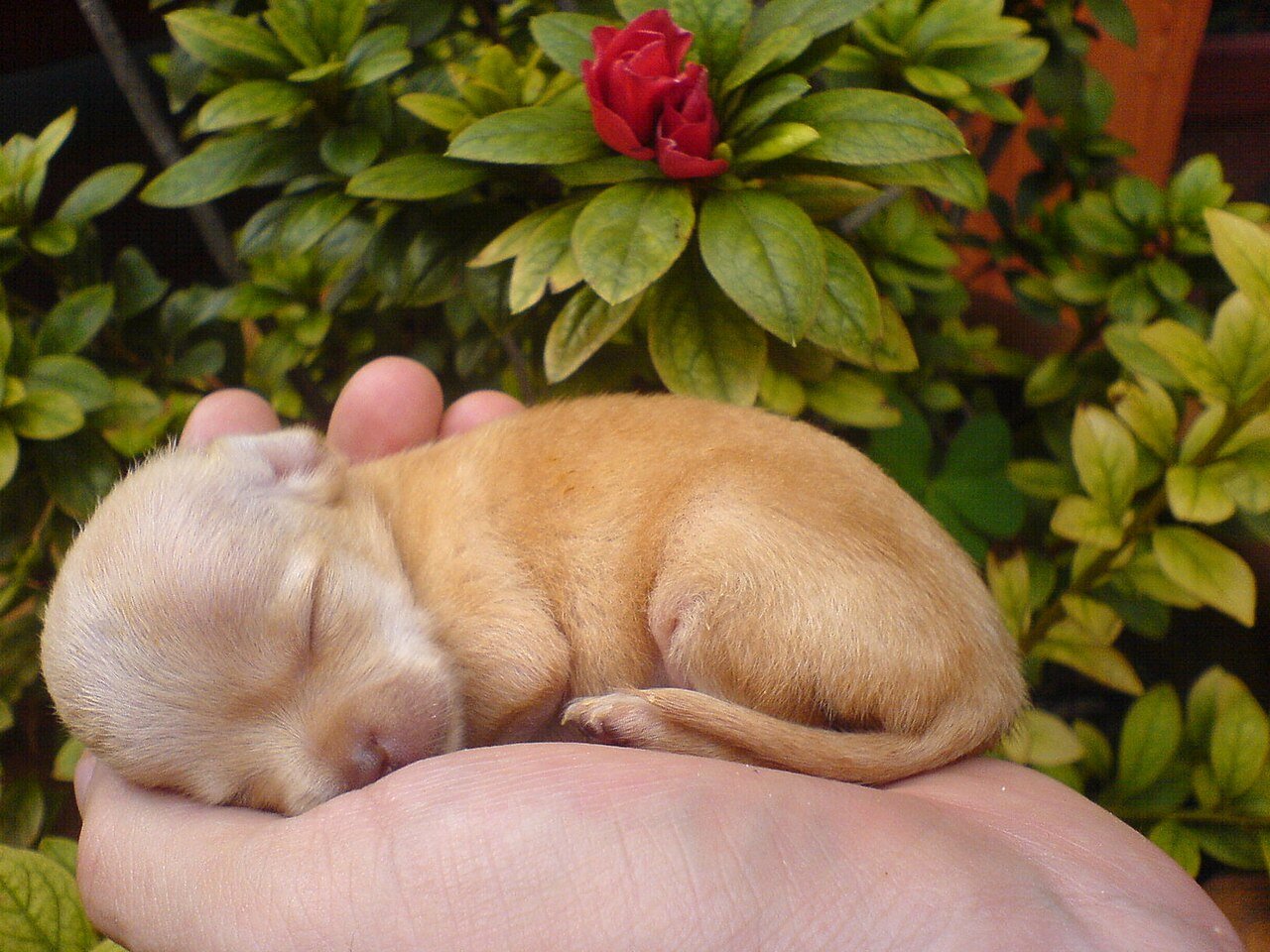
Very small. The AKC breed standard says adult Chihuahuas should not exceed 6 pounds and stand about 5 to 8 inches tall. They come in two coat types, smooth and long, and almost any color.
Small and medium breeds usually reach adult size around 10 to 12 months, according to VCA. Most of a Chihuahua’s growth happens in the first six months.
What should a Chihuahua puppy eat?
Feed a complete puppy food that meets AAFCO nutrient profiles for growth or all life stages, ideally with small kibble that tiny jaws can manage. Our guide to small breed puppy food explains the label and what’s marketing.
Toy breed puppies have very little energy in reserve. VCA lists inadequate nutrition in toy breed puppies as a cause of low blood sugar. Signs include weakness, wobbling, trembling, confusion and, in severe cases, seizures. If you see these, call your vet right away and ask what to do on the way in.
Feeding tips for Chihuahua puppies:
- Offer three or four small meals a day for young puppies. Your vet may suggest more for very small ones.
- Measure every meal. A few extra pieces of kibble are a big deal for a 3-pound dog.
- Keep treats tiny and under 10% of daily calories.
- Skip table scraps, especially fatty foods and cooked bones.

How do you keep a tiny puppy safe at home?
Most Chihuahua injuries happen during everyday life. A jump from the couch, a slip from a child’s arms or a door closing at the wrong moment can hurt a puppy this small.
- Teach kids to sit on the floor when they hold the puppy.
- Use pet stairs or ramps for beds and sofas, or lift your puppy down.
- Watch where you step, and look before you close doors.
- Keep larger dogs’ play supervised and gentle.
- Use a harness instead of a collar for walks, since tiny necks and windpipes are delicate.
Chihuahua puppies also don’t need much space to burn energy. AKC says trotting around after their people is usually enough exercise, and short, slow walks keep them fit.
How do you keep a Chihuahua puppy warm in winter?
Chihuahuas get cold fast. They’re tiny, many have thin coats, and they lose body heat quickly. The AVMA notes that pets with short coats, small bodies or very young age are more sensitive to cold.
- Put a sweater or coat on your puppy for outdoor trips in cold weather.
- Keep potty breaks short and come straight back inside.
- Give your puppy a warm bed away from drafts, with a blanket to burrow in.
- Wipe paws after walks to remove ice-melt and road salt.
If your puppy shivers hard, seems sluggish or has cold ears and paws, warm it up indoors and call your vet if it doesn’t perk up quickly.
Holiday safety for small puppies
November and December bring visitors, rich food and decorations to many US homes. For a Chihuahua puppy, a small amount of the wrong thing can be serious.
- Keep holiday plates, chocolate, grapes and raisins, xylitol gum and fatty scraps out of reach. Our guide to Thanksgiving food and dogs covers what’s risky.
- Ask guests not to feed the puppy.
- Give your puppy a quiet room or crate when the house gets busy.
- Watch the front door, since a tiny puppy can slip out fast.
If your puppy eats something it shouldn’t, call your vet or ASPCA Animal Poison Control at 888-426-4435 (a fee may apply).
How do you train a Chihuahua puppy?
AKC describes Chihuahuas as alert and intelligent, eager to please, and responsive to positive training. They also learn quickly how to get their way. Be consistent from the first day.
Start with:
- Potty training, using frequent trips out and rewards. Small bladders mean more trips.
- Name and recall games indoors.
- Calm handling of paws, mouth and ears.
- Gentle socialization with friendly people and calm dogs.
Avoid carrying your puppy everywhere so it never learns to walk on a leash or meet the world on its own four feet. And don’t laugh off growling or snapping just because the dog is small. Work with a positive-reinforcement trainer if those habits start.

What health issues affect Chihuahuas?
According to AKC, issues that can affect the breed include heart problems such as patent ductus arteriosus and mitral valve disease, eye disease, loose kneecaps (patellar luxation) and epilepsy. Pick a breeder who does genetic health screening on the parents, and keep up with regular vet visits.
Small dogs are also prone to dental problems, so start tooth brushing early with a toothpaste made for dogs.
Is a Chihuahua puppy right for you?
Chihuahuas can live long lives and bond closely with their people. They suit adults and families with older, gentle children best. If you want a sturdier small dog or a different temperament, compare breeds in our guide to best dog breeds for first-time owners, or read about the Cavapoo puppy. And if you’d like a dog at the other end of the size chart, see our Bernese Mountain Dog puppy guide.
Frequently asked questions
How to train chihuahua puppy?
Keep sessions short and positive, with tiny treats and lots of praise. AKC says Chihuahuas are alert and intelligent and respond well to positive training. Be consistent from day one and don’t allow puppy behavior you wouldn’t want in an adult dog, like jumping at guests or guarding the couch. Potty training takes patience, so take your puppy out often and reward it right away.
How to feed chihuahua puppy?
Feed a complete puppy food with small kibble, labeled to meet AAFCO nutrient profiles for growth or all life stages. Split the day’s food into several small meals so your puppy doesn’t go long without eating. Measure portions, since a few extra pieces of kibble add up fast for a dog this small.
How much should chihuahua puppy eat?
The amount depends on the food’s calories and your puppy’s age and weight. Start with the feeding chart on the bag, divide it into three or four meals for a young puppy, and adjust based on body condition. Your vet can tell you if your puppy is too thin or gaining too fast.
How much is chihuahua puppy in kenya?
We cover US buying and adoption, so we can’t give a reliable local price for Kenya. Wherever you live, prices vary by breeder, and the cheapest puppy often costs more later in vet bills. Look for a breeder who health screens the parents and lets you meet them, or check local shelters and rescues.
How big is chihuahua puppy?
Chihuahua puppies often weigh well under a pound at birth and stay small. AKC’s standard says adults should not exceed 6 pounds and stand about 5 to 8 inches tall. Some pet Chihuahuas end up a little bigger than the show standard, especially if the parents were large.
Vet note: This article is general information and is not a substitute for advice from your own veterinarian. If your puppy is having trouble breathing, collapses, has a seizure or may have eaten something toxic, call your vet or the nearest emergency animal hospital right away. ASPCA Animal Poison Control: 888-426-4435 (a fee may apply).
