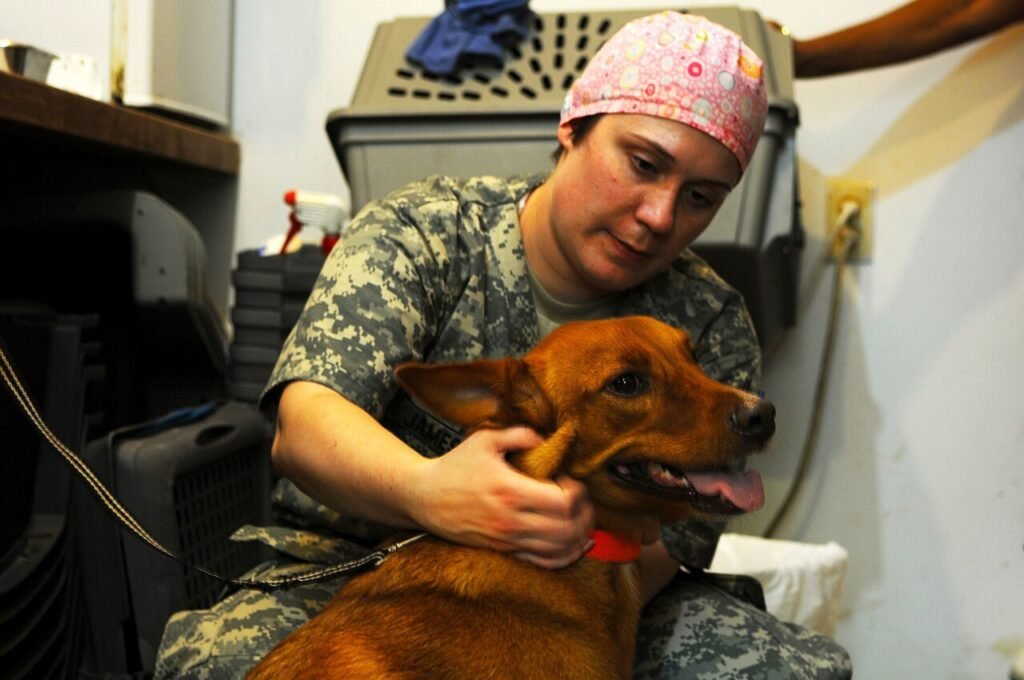
Book your puppy’s first vet visit within a few days of bringing them home, usually around 8 weeks old. Bring all breeder or shelter records and a fresh stool sample. Expect a full exam, a weight check, a fecal test, deworming and the next round of core vaccines. Costs vary, so ask for an estimate first.
Quick takeaways
- Schedule the first vet visit within a few days of bringing your puppy home, even if they seem healthy.
- Bring every record you got from the breeder or shelter, plus a fresh stool sample in a sealed bag.
- The visit usually covers a physical exam, a fecal test, deworming and core vaccines.
- Prices vary a lot by region and clinic, so call ahead and ask what the visit includes.
- Use a carrier or keep your puppy in your arms so they don’t touch the waiting room floor.
In this guide
- When should a puppy have their first vet visit?
- First vet visit puppy checklist: what to bring
- What happens at a puppy’s first vet visit?
- How much does a puppy’s first vet visit cost?
- Questions to ask at your puppy’s first vet visit
- How do I keep my puppy calm at the vet?
- What happens after the first vet visit?
- Frequently asked questions
Your puppy’s first vet visit sets the tone for their whole health care routine. It’s where you get a baseline exam, start or continue the vaccine series and catch common puppy problems early. A little prep makes the visit faster, cheaper and a lot less stressful for both of you.
When should a puppy have their first vet visit?
Aim for within the first few days after you bring your puppy home. Most puppies go home at around 8 weeks old, which lines up well with the vaccine schedule. Many breeders and shelters also ask for a vet check within a set number of days as part of their health guarantee, so read your contract.
Book early even if your puppy seems perfectly healthy. Some problems, such as worms, a heart murmur or a hernia, don’t show obvious signs at home. And if your puppy has already had a first set of shots, the next round is usually due within a few weeks.
First vet visit puppy checklist: what to bring
Put this kit together the night before:
- Every record you have. That includes vaccine stickers or certificates, deworming dates and products, and any notes from the breeder or shelter.
- A fresh stool sample. Collect it within about 12 hours of the visit and seal it in a plastic bag. Your vet will use it to check for intestinal parasites.
- A carrier or crate. Small puppies ride safer in a carrier, and it keeps them off the clinic floor.
- A collar or harness and leash. Good for bigger puppies and for walking from the car.
- Small, soft treats. These help your puppy connect the exam room with good things.
- A towel or puppy pad. For car accidents or a slippery exam table.
- Your food info. Bring the brand and how much you’re feeding, or snap a photo of the bag.
- A written list of questions. It’s easy to forget them once you’re in the room.
What happens at a puppy’s first vet visit?
Every clinic does things a little differently, but most first visits follow a similar pattern.
The physical exam
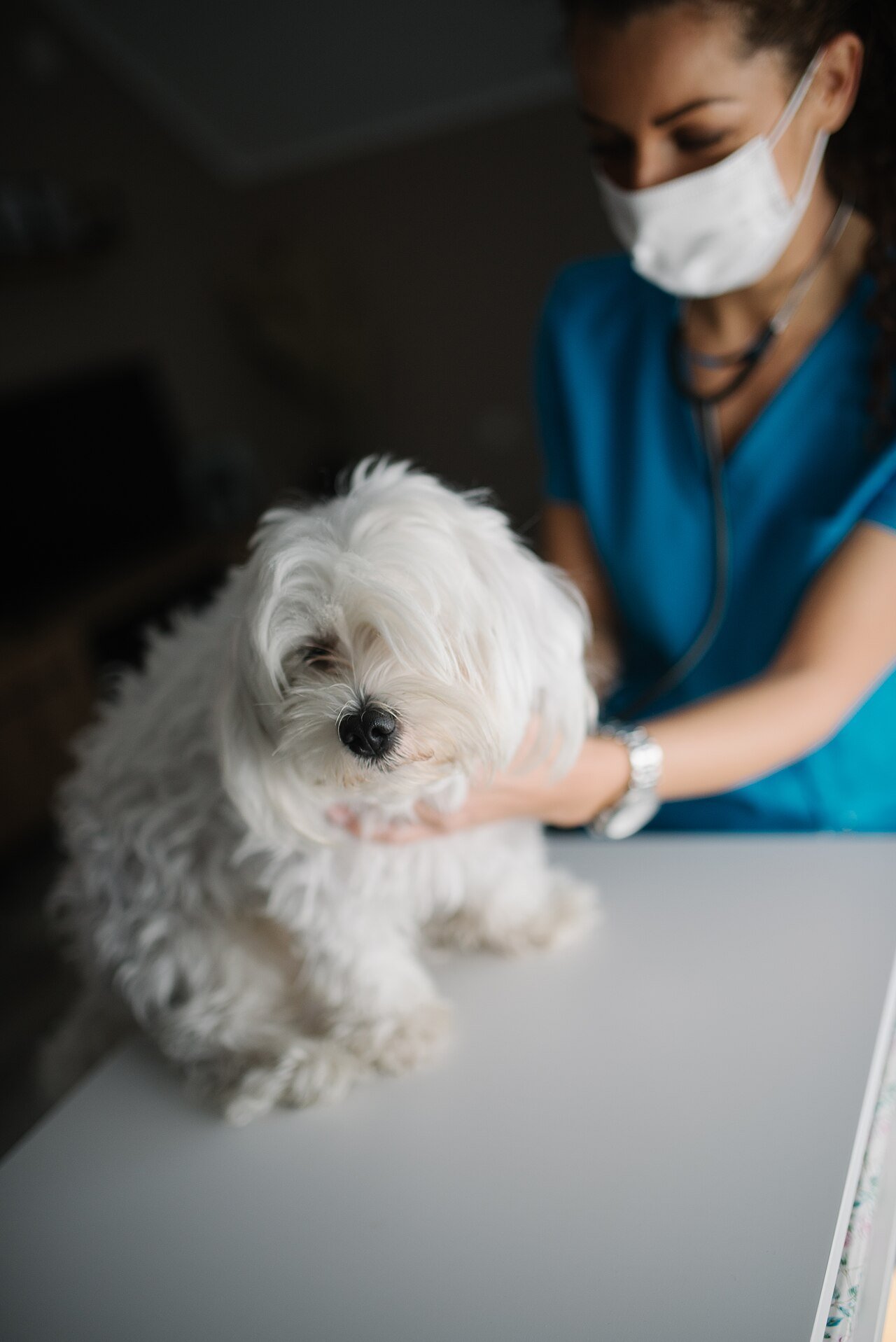
Your vet will weigh your puppy and take their temperature. Then they’ll go nose to tail: eyes, ears, nose, mouth and teeth, heart and lungs, belly, skin and coat, joints and lymph nodes. They’ll also check for things that are common in young puppies, such as an umbilical hernia, ear mites, fleas and, in male puppies, whether both testicles have come down.
Parasite testing and deworming
Puppies very often have intestinal worms, sometimes passed on from their mother before birth. Your vet will likely run a fecal test and give a dose of dewormer. Our puppy deworming schedule explains why puppies get several doses.
Vaccines
Core puppy vaccines protect against distemper, parvovirus, adenovirus and, at the right age, rabies. Puppies get a series of shots a few weeks apart, because antibodies from their mother can block a single early dose. The 2022 AAHA Canine Vaccination Guidelines recommend continuing the series until about 16 weeks of age or older. Your vet will also ask about your puppy’s lifestyle to decide whether vaccines like Bordetella, leptospirosis or Lyme make sense where you live. See our puppy vaccination schedule for the full timeline.
The conversation
This part matters as much as the shots. Expect to talk about food and portions, house training, chewing and biting, socialization, flea and tick prevention, heartworm prevention and a plan for future visits.
How much does a puppy’s first vet visit cost?
There isn’t one national price. What you pay depends on your area, the type of clinic and what your puppy needs that day. A visit in a big city usually costs more than one in a small town, and an emergency hospital costs more than a general practice.
The bill is usually made up of several line items:
| Line item | Usually included? | What affects the price |
|---|---|---|
| Exam fee | Yes | Clinic location and type |
| Core vaccines | Often | How many are due at this visit |
| Fecal test | Often | In-house test or outside lab |
| Dewormer | Often | Product and your puppy’s weight |
| Flea, tick and heartworm prevention | Sometimes | Product and how many months you buy |
| Microchip | Sometimes | Some shelters and breeders have already done it |
To keep things predictable, call ahead and ask what the first puppy visit includes and request an estimate. Ask whether they offer a puppy wellness plan that bundles the vaccine series and exams. Some families also look at puppy insurance early, since many policies don’t cover conditions that show up before you enroll.
Questions to ask at your puppy’s first vet visit
Here’s a list worth bringing:
- What vaccines does my puppy need, and when is the next visit?
- When is it safe to take my puppy to parks, classes or places other dogs go?
- What flea, tick and heartworm prevention do you recommend here?
- Is my puppy at a healthy weight, and how much should they eat?
- When should we talk about spaying or neutering for this breed and size?
- Is my puppy microchipped, and is the chip registered to me?
- What signs mean I should call you right away?
- What do you charge for after-hours care, and which emergency hospital do you recommend?
The AVMA’s page on your pet’s healthy start is a handy read before the visit if you want more background.
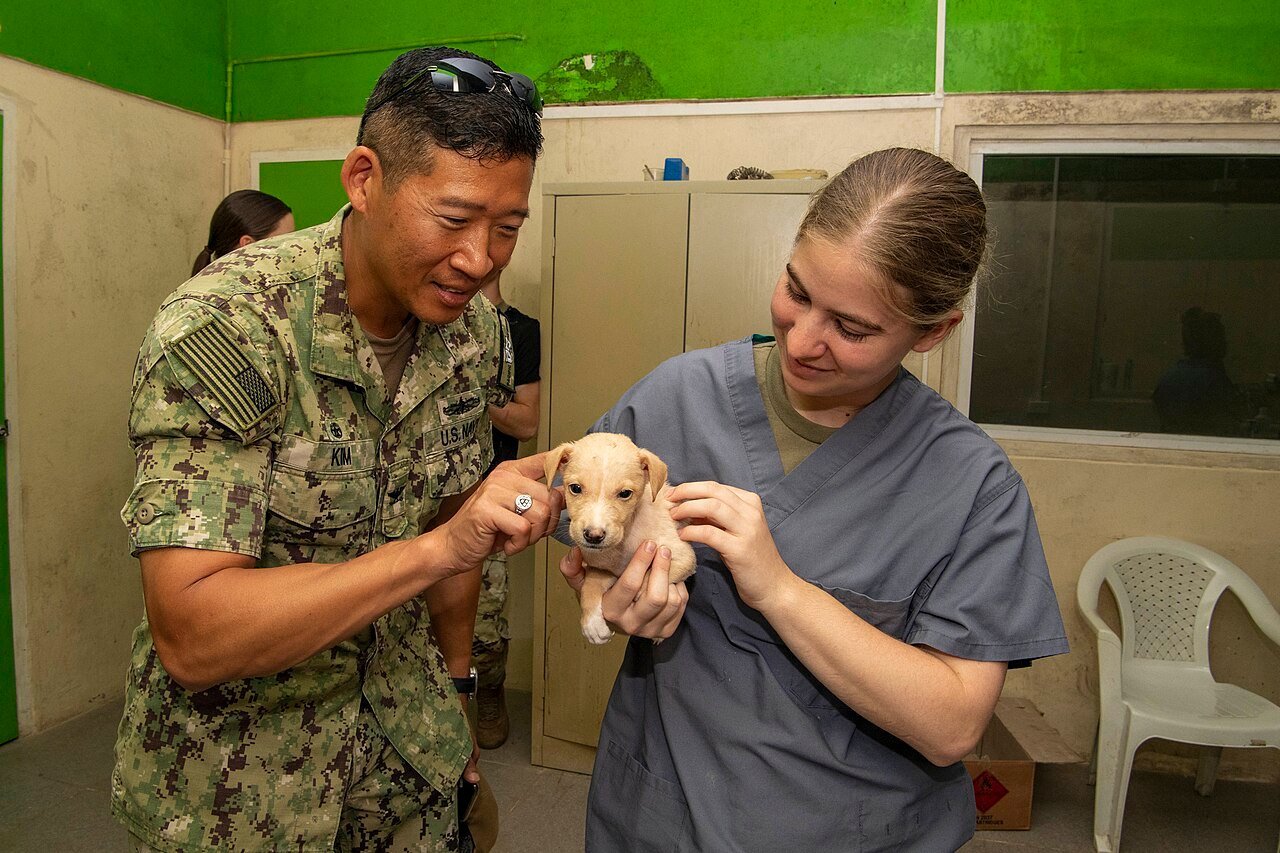
How do I keep my puppy calm at the vet?
Puppies pick up a lot from the first few vet trips, so it pays to make them pleasant.
- Practice handling at home. Touch paws, ears and lips for a second and reward. Build up slowly.
- Get them used to the carrier. Leave it open with a blanket and toss treats inside a few times a day.
- Keep them off the floor. Until your puppy finishes their vaccines, hold them or keep them in the carrier in the waiting room.
- Bring a little hunger. A puppy who skipped a big meal before the drive is more likely to take treats.
- Stay relaxed. Talk in a normal, easy voice. Puppies notice when you’re tense.
Ask your clinic about “happy visits” too. Some let you stop by just to weigh your puppy and hand out a treat, with no needles involved.
What happens after the first vet visit?
Most puppies feel normal after their shots. Some are sleepy or a bit sore for a day or so. Call your vet if your puppy has facial swelling, hives, vomiting, diarrhea, trouble breathing or seems very weak after a vaccine, since these can be signs of a reaction.
Write down the date of the next appointment before you leave, and keep all records in one folder or a phone note. You’ll need them for boarding, grooming, puppy classes and your local dog license.
If anything changes between visits, such as limping, low energy or not eating, don’t wait for the next scheduled appointment. Our guide on puppy limping covers when that needs a same-day call. And if you’re still in the first few days at home, our first night at home guide can help you settle in.
Frequently asked questions
How much does first vet visit cost for puppy?
It depends on where you live, the type of clinic and what’s done during the visit. The exam fee is only part of it. Vaccines, a fecal test, deworming medicine and a microchip each add to the total. Call two or three clinics, ask what their first puppy visit includes and request a written estimate. Some clinics offer puppy wellness packages that bundle the whole vaccine series.
How much is a puppy’s first vet visit with shots?
A visit with vaccines costs more than an exam alone because each vaccine is billed separately. Ask the clinic which vaccines your puppy needs at this age, the price of each and whether a package covers the full puppy series. Low-cost vaccine clinics and shelters in many US cities also offer vaccines, though they may not include a full exam.
How to take puppy to first vet visit?
Bring your puppy in a carrier or on your lap in the car, with a towel in case of accidents. Keep them in the carrier or in your arms in the waiting room until their vaccines are complete. Pack treats, records, a stool sample and your list of questions.
How long is a puppy’s first vet visit?
Plan for at least half an hour to an hour, including check-in and wait time. The exam itself is often shorter. Ask when you book how long they usually set aside for a new puppy visit, since many clinics schedule extra time for questions.
How to prepare puppy for first vet visit?
In the days before, practice gentle handling at home. Touch your puppy’s paws, ears and mouth for a second or two and give a treat each time. Let them get used to the carrier with treats inside. Skip a big meal right before the drive so they’re less likely to get carsick and more interested in treats.
Vet note: This article is general information and is not a substitute for advice from your own veterinarian. If your puppy is having trouble breathing, collapses, has a seizure or may have eaten something toxic, call your vet or the nearest emergency animal hospital right away. ASPCA Animal Poison Control: 888-426-4435 (a fee may apply).
