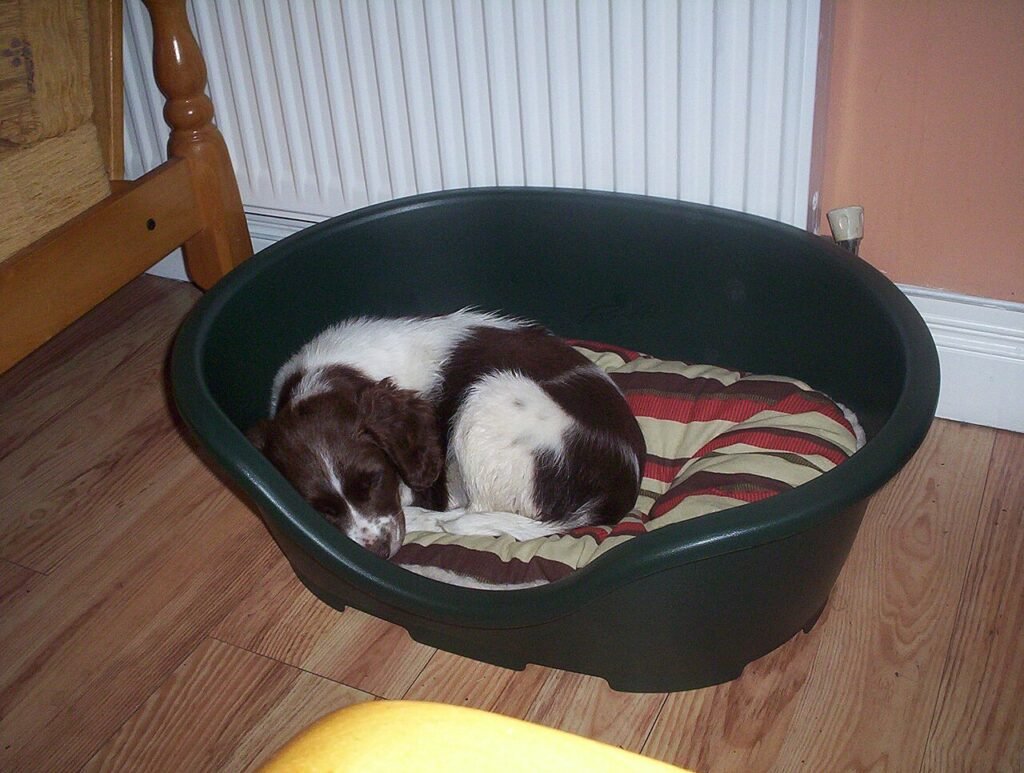
On your puppy’s first night at home, put the crate or a small pen right beside your bed, feed the last meal about three hours before bedtime and take your puppy out to potty just before lights out. Expect one or two night trips outside. If your puppy cries, take them out quietly, then settle them back with no play.
Quick takeaways
- Keep your puppy in your bedroom the first night, in a crate or pen they can’t climb out of.
- Feed dinner about three hours before bed and pick up the water bowl about an hour before.
- Plan on a potty trip every two to three hours overnight for an 8 to 10 week old puppy.
- Crying on night one is normal. Check for a potty need, stay calm and boring, and avoid play.
- Keep night one quiet: no visitors, no long car trips and no dog parks.
In this guide
The first night with a new puppy tends to be tiring for everyone. Your puppy has just left their mother and littermates, ridden in a car and landed in a house full of new smells. A little crying is normal. A plan for the evening and the night makes it much easier on both of you.
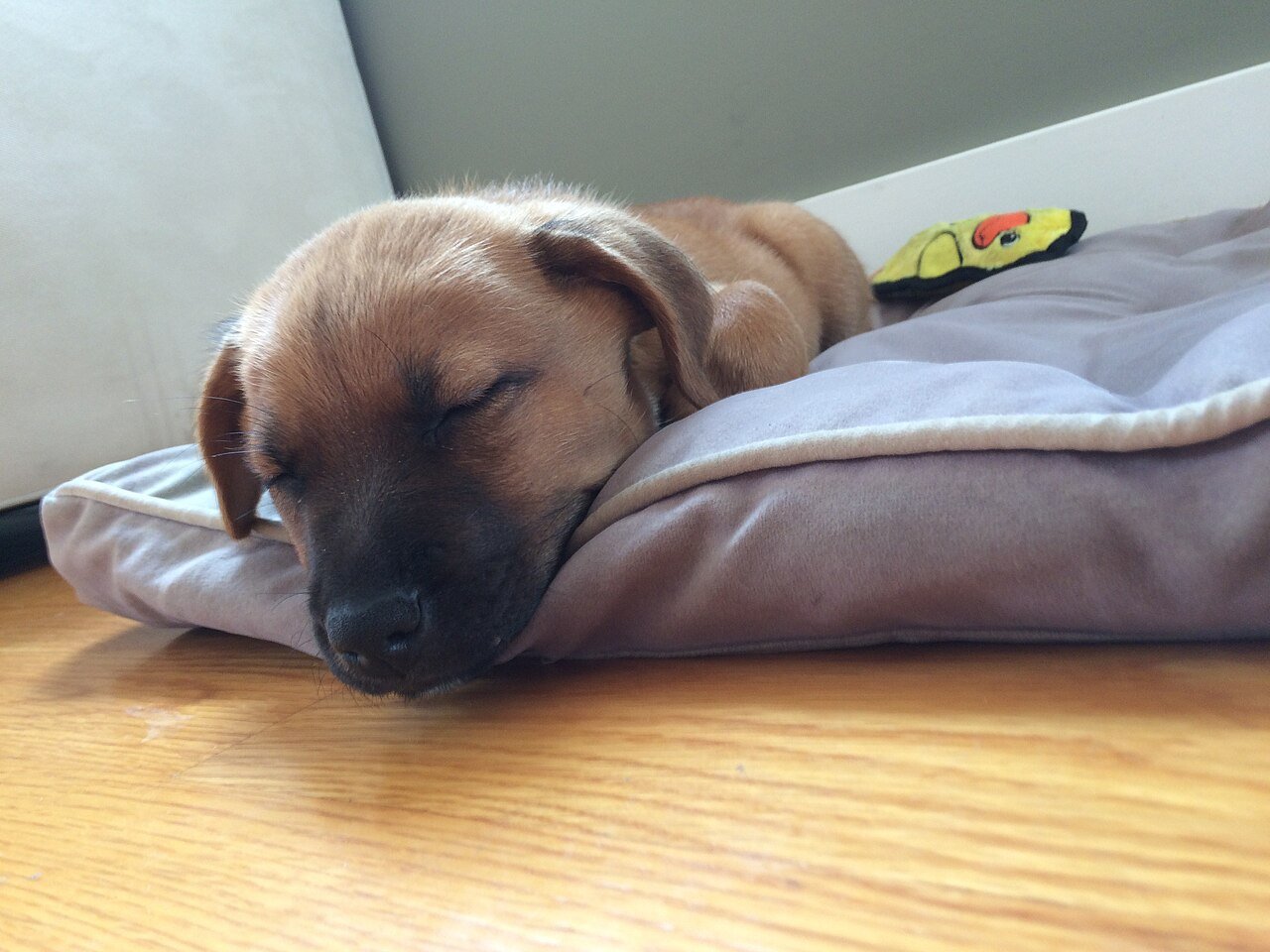
What should I do the first night with a new puppy?
Think of night one as three parts: the afternoon you get home, the evening routine, and the night itself. Most of the work happens before bedtime.
Before you pick your puppy up
Get the sleeping spot ready so you aren’t building a crate at 10 p.m.
- Set up a crate or a small playpen right next to your bed. For a crate, pick one with a divider so your puppy has just enough room to stand, turn and lie down. Too much space invites accidents at one end.
- Put a washable blanket or towel inside. If the breeder or shelter will give you a cloth that smells like the litter, bring it.
- Puppy-proof the bedroom floor: tuck away cords, shoes, socks and anything small enough to swallow.
- Choose one potty spot outside and decide how you’ll get there at night. A leash, a flashlight and slip-on shoes by the door help a lot.
- Ask what and when your puppy has been eating, and buy the same food for the first week or two.
Our new puppy checklist has the full list of supplies to buy before the big day, and what a puppy costs in the first year helps you budget for them.
When you arrive home
Carry your puppy straight to the potty spot before going inside. Wait quietly for a few minutes, and if they go, praise them calmly and give a small treat. This is the first step of potty training your puppy, and it helps to start on the right foot.
Inside, let your puppy explore one room at a time. Keep the house calm. Friends and relatives will want to visit, but a quiet first day helps a puppy settle. Short play, lots of naps and a few potty trips are plenty.

Leave the crate door open during the day and toss a treat or two inside so your puppy discovers it on their own. A few relaxed visits before bedtime make the crate feel less strange at night.
How to handle a puppy’s first night at home?
The evening routine
Timing the evening is the most useful thing you can do for a good first night.
- Feed the last meal about three hours before you plan to sleep. A full belly needs a potty trip later.
- Pick up the water bowl about an hour before bed, unless your vet has told you otherwise or it is very hot. Put it back down first thing in the morning.
- Play a gentle game 30 to 60 minutes before bed so your puppy is tired, then let things wind down.
- Take your puppy out to potty right before you turn out the lights, even if they went recently.
- Put your puppy in the crate with a chew toy, say a short, calm cue like “bedtime”, and turn off the lights.
Where your puppy should sleep
Keep the crate within arm’s reach of your bed. A puppy who can hear and smell you usually settles faster than one shut away in the laundry room. Some owners put their fingers near the crate door for the first few minutes. A soft white-noise machine or a fan can cover small household sounds.

If you plan for your dog to sleep somewhere else long term, start by your bed anyway. Move the crate a little farther away each week once your puppy is sleeping through the night.
Night potty trips
Young puppies can’t hold their bladder all night. A common rule of thumb is about one hour for every month of age, plus one, so an 8 week old puppy may manage about two to three hours. Set an alarm for one planned trip in the early hours rather than waiting for crying.
Keep night trips boring. Carry your puppy out, wait at the potty spot, praise them quietly when they go, then go straight back to the crate. No play, no bright lights and no long chats. You want your puppy to learn that nighttime is for sleeping.
How to calm a puppy the first night home?
Crying on night one usually means your puppy is lonely, needs to potty, or hasn’t settled into the new space yet. Here is how to tell which and what to do:
- Just went to bed and crying: wait a few minutes. Many puppies fuss and then sleep. Speak softly or rest a hand by the crate.
- Woke up after an hour or more: assume it’s a potty need. Take them out calmly and return to the crate.
- Crying right after a potty trip: they may be cold or unsettled. Check the blanket, offer the chew toy, and stay close and quiet.
- Frantic crying, drooling or trying to escape the crate: your puppy may be very stressed. Move the crate even closer, or sit by it until they relax.
Avoid scolding, which only adds stress, and avoid long play sessions in the middle of the night. If the crying keeps going night after night, see our guide to puppy crying at night for a longer plan.

Should you leave a puppy alone on its first night?
No. A puppy on their first night has just lost everything familiar, so they do best with a person nearby. Keep the crate in the room where you sleep. If someone needs to sleep elsewhere, they can take turns, but the puppy shouldn’t spend the night alone in a closed room.
During the day, you can begin with short, easy separations, like stepping into the next room for a minute while your puppy chews a toy in the pen. Longer time alone can come later, after your puppy is comfortable in the crate.
What to do for the first few nights at home
The first week usually gets a little easier each night. A few things help:
- Keep bedtime, meals and potty trips at the same times every day.
- Book a first vet visit within the first week, and bring any health papers from the breeder or shelter.
- Keep your puppy away from dog parks and busy pet store floors until your vet says the vaccine series is far enough along.
- Write down when your puppy eats, sleeps and pees for a few days. Patterns show up quickly.
- If another dog already lives with you, keep first meetings short and supervised, and give each dog its own space to rest. Our guide to getting a second dog covers introductions in more detail.
Sleep loss is real for most new puppy owners. It usually improves within a few weeks as your puppy’s bladder grows and the routine sticks.
Frequently asked questions
Should I let my puppy sleep in my bed the first night?
It’s safer to use a crate or pen beside the bed. A small puppy can fall off a bed, chew cords at night, or have an accident you won’t notice. A crate next to you gives the same comfort, and you can rest a hand near the door if they fuss.
How long will my puppy cry the first night?
It varies a lot. Some puppies fuss for a few minutes and fall asleep, others wake several times. Most settle more quickly each night over the first week once the crate and your bedroom become familiar.
Should I wake my puppy up to pee at night?
For young puppies it helps to set an alarm for one planned trip in the middle of the night, so they don’t have to wake up and cry first. As your puppy grows and holds it longer, push the alarm later and then drop it.
What should I put in the crate the first night?
A washable blanket or towel, ideally one that smells like the litter, and one safe chew toy. Skip thick beds and loose stuffing for now, since some puppies chew or pee on them.
Vet note: This article is general information and is not a substitute for advice from your own veterinarian. If your puppy is having trouble breathing, collapses, has a seizure or may have eaten something toxic, call your vet or the nearest emergency animal hospital right away. ASPCA Animal Poison Control: 888-426-4435 (a fee may apply).
