
Most puppies eat four meals a day from weaning to about 3 months, three meals a day from 3 to 6 months, and two meals a day from about 6 months on. Feed at the same times each day, measure each meal using the food label as a starting point, and take your puppy outside soon after every meal.
Quick takeaways
- Four meals a day until about 12 weeks, three until about 6 months, then two.
- Toy and small breeds may need smaller, more frequent meals for longer to keep blood sugar steady.
- Split the daily amount on the food label across meals and adjust to your puppy’s body shape.
- Puppies often poop within about 5 to 30 minutes of eating, so plan a potty trip after every meal.
- Make food changes slowly, over about a week, to avoid an upset stomach.
In this guide
- What is a puppy feeding schedule?
- Puppy feeding schedule by age
- Sample puppy feeding times
- How much should my puppy eat at each meal?
- How to feed a puppy kibble?
- Can over feeding a puppy cause diarrhea?
- How long after feeding a puppy does it poop?
- How to feed a puppy with a bottle?
- Snacks, fruit and seasonal foods
- Frequently asked questions
A steady feeding routine does more than keep your puppy fed. It shapes when they need to potty, how well they sleep and how easy they are to train. This guide gives meal counts and sample times by age, along with what to do when your schedule meets real life.

What is a puppy feeding schedule?
A puppy feeding schedule is a set number of meals at the same times each day. Instead of leaving a full bowl out, you offer measured meals and pick up what’s left after 15 to 20 minutes. Puppies have small stomachs and high energy needs, so they eat more often than adult dogs and move to fewer, larger meals as they grow.
Fixed meals also make potty training more predictable. If you know when food goes in, you have a good idea when your puppy will need to go out.
Puppy feeding schedule by age
| Age | Meals per day | What it usually looks like |
|---|---|---|
| 3 to 6 weeks | Nursing plus softened food | Weaning starts with puppy food soaked into a mush, still with mom |
| 6 to 12 weeks | 4 | Puppy food, softened at first if needed, spread through the day |
| 3 to 6 months | 3 | Morning, midday and early evening |
| 6 to 12 months | 2 | Morning and evening; toy breeds may stay on 3 longer |
| 12 months and up | 2 | Most dogs switch to adult food around now; large and giant breeds later |
These ages are a guide. Toy breeds, like Chihuahuas and Yorkies, are prone to low blood sugar and often need smaller, more frequent meals for longer. Large and giant breed puppies grow for longer and should stay on a large-breed puppy food until your vet says it’s time. Our guide on when to switch from puppy to adult food covers the timing by size.
Sample puppy feeding times
Pick times that fit your day and stick to them, weekends included. Here are two examples.
8 to 12 weeks (four meals)
- 7:00 a.m. breakfast, then potty
- 11:00 a.m. lunch, then potty
- 3:00 p.m. afternoon meal, then potty
- 6:30 p.m. dinner, then potty
- 9:30 p.m. last potty trip before bed (no food)
If you work outside the home, a midday meal can come from a family member, a neighbor or a dog walker. Some owners use a timed feeder for one meal, though it’s harder to see if your puppy actually ate.
3 to 6 months (three meals)
- 7:00 a.m. breakfast
- 12:30 p.m. lunch
- 6:00 p.m. dinner
6 months and older (two meals)
- 7:00 a.m. breakfast
- 6:00 p.m. dinner
Keep the last meal about three hours before bedtime. It gives your puppy time to digest and go potty before the night.
How much should my puppy eat at each meal?
Start with the feeding chart on your puppy food bag, which is usually based on your puppy’s current weight and age. That chart gives a daily total. Divide it by the number of meals. So a puppy who needs 1 1/2 cups a day on four meals gets a little over 1/3 cup per meal.
Treat the label as a starting point and adjust to your puppy:
- You should be able to feel the ribs easily without seeing them sticking out.
- From above, there should be a visible waist behind the ribs.
- Weigh your puppy every week or two, and ask your vet about body condition at each visit.
Training treats count too. Keep them to about 10 percent of daily calories, or use some of the day’s kibble as rewards. For exact amounts by weight, see how much to feed a puppy.
How to feed a puppy kibble?
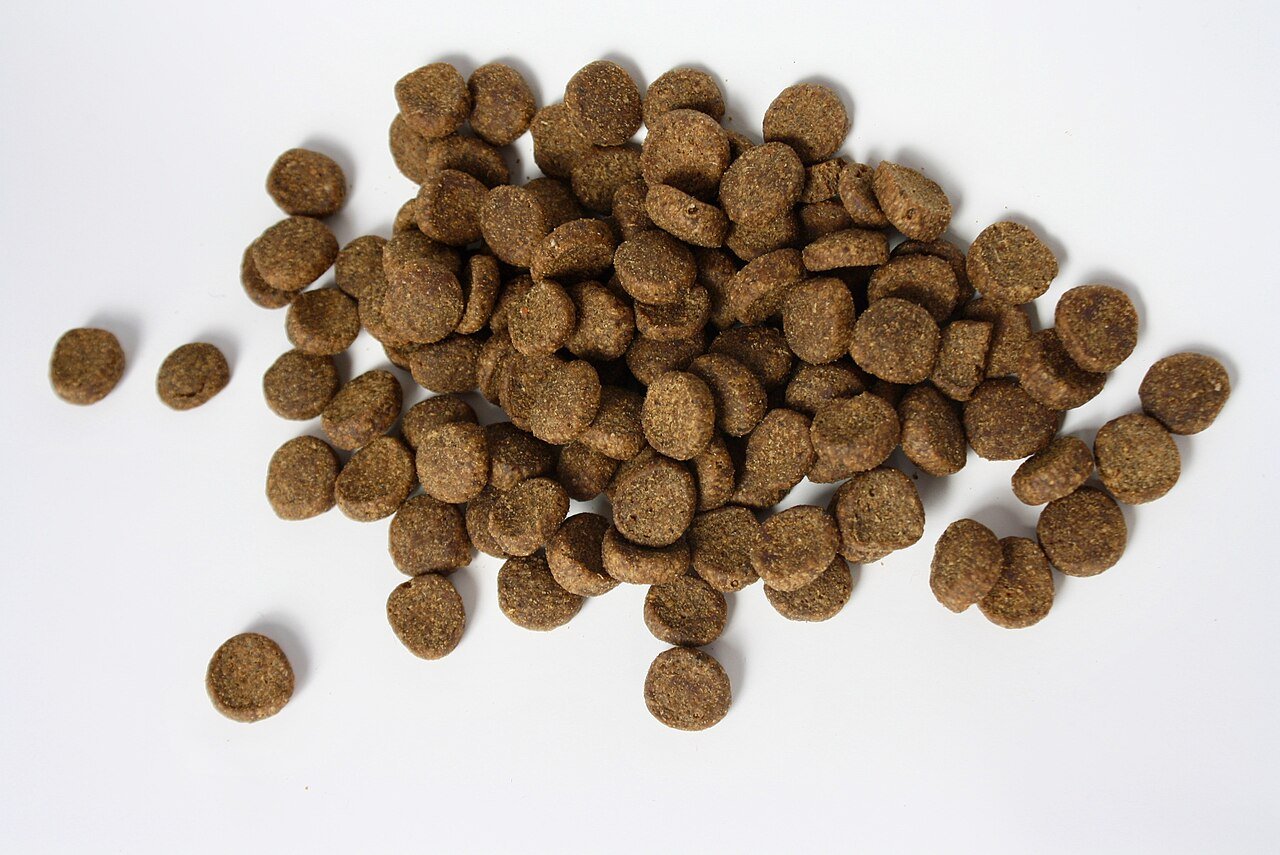
Choose a food labeled complete and balanced for growth or for all life stages, according to AAFCO nutrient profiles. For puppies expected to weigh 70 lb or more as adults, the label should say it covers growth of large size dogs.
- Measure with a real measuring cup or, better, a kitchen scale.
- For puppies under about 10 weeks, or ones that struggle with dry food, soak the kibble in warm water for 10 to 15 minutes until soft. Reduce the water over a couple of weeks.
- Put the bowl down in a quiet spot, away from other pets.
- Pick it up after 15 to 20 minutes, even if food is left. Offer the next meal at the normal time.
- Keep fresh water available during the day.
If your puppy gulps food, a slow feeder bowl or a puzzle feeder can slow things down.

Changing to a new food
Keep the food your breeder or shelter used for the first week or two. When you want to switch, mix the new food in gradually over about seven days: roughly a quarter new for a couple of days, then half, then three quarters, then all new. Slow down if stools get loose.
Can over feeding a puppy cause diarrhea?
Yes. Overfeeding is one of the most common reasons for soft stools in puppies. Too much food at once, too many treats, rich table scraps or a sudden change in food can all upset a young gut. Try smaller, measured meals and fewer extras.
Diarrhea also has many other causes in puppies, including parasites and infections like parvovirus. Call your vet if diarrhea lasts more than a day, contains blood, or comes with vomiting, tiredness or refusing food. Puppies dehydrate faster than adult dogs, so don’t wait it out for long.
How long after feeding a puppy does it poop?
Many puppies need to poop within about 5 to 30 minutes after eating. Eating stimulates the gut, a response called the gastrocolic reflex, and in puppies it is quick. Take your puppy to their potty spot soon after every meal, and after waking up and playing, too. Writing down meal and potty times for a few days helps you spot your puppy’s own pattern.
How to feed a puppy with a bottle?
Bottle feeding is for very young puppies who can’t nurse from their mother, such as orphans or puppies in a large litter who aren’t gaining weight. If you’re in this situation, call your vet first. Newborn puppies can get cold, dehydrated or underweight quickly, and your vet can set a feeding plan based on weight.
General steps vets give for bottle feeding:
- Use a commercial puppy milk replacer, not cow’s milk, which can upset their stomach.
- Warm the formula to about body temperature and test a drop on your wrist.
- Hold the puppy on their belly, head level, the way they would lie to nurse. Never feed a puppy on its back, because milk can go into the lungs.
- Let the puppy suck at their own pace. Don’t squeeze the bottle.
- Burp them gently afterward by holding them upright and patting their back.
- Puppies under about three weeks need help peeing and pooping: wipe their belly and bottom with a warm, damp cloth after each feeding.
Newborns usually need feeding every few hours, around the clock, for the first weeks. Weaning onto softened puppy food usually starts around 3 to 4 weeks.

Snacks, fruit and seasonal foods
Small amounts of some foods can be safe extras, like plain canned pumpkin or a few slices of apple without seeds or core. See can puppies eat pumpkin and can puppies eat apples before adding them. Count extras as part of the 10 percent treat allowance.
Feeding fits around vet visits too. Puppies on a normal schedule can keep their usual meals on vaccine days unless your vet says otherwise. See our puppy vaccination schedule for when those visits happen.
Frequently asked questions
What time should a puppy eat its last meal?
Aim for about three hours before bedtime. That gives your puppy time to digest and go potty before you turn in, which means fewer night wake-ups.
Should I leave food out for my puppy all day?
It’s usually better not to. Free feeding makes it hard to know how much your puppy eats, can lead to weight gain, and makes potty timing unpredictable. Offer meals for 15 to 20 minutes, then pick the bowl up.
Can I feed my puppy adult dog food?
Puppies need food made for growth. Look for an AAFCO statement on the bag that says the food is complete and balanced for growth or for all life stages. For puppies that will be large adults, choose one that says it covers growth of large size dogs.
My puppy skipped a meal. Should I worry?
One skipped meal in an otherwise bright, playful puppy is usually not a concern. Call your vet if your puppy refuses food for a whole day, seems tired or weak, or has vomiting or diarrhea. Toy breed puppies should be checked sooner because their blood sugar can drop quickly.
Vet note: This article is general information and is not a substitute for advice from your own veterinarian. If your puppy is having trouble breathing, collapses, has a seizure or may have eaten something toxic, call your vet or the nearest emergency animal hospital right away. ASPCA Animal Poison Control: 888-426-4435 (a fee may apply).
