
The usual puppy deworming schedule, based on Companion Animal Parasite Council guidelines, is a dose at 2, 4, 6 and 8 weeks of age, followed by a monthly preventive that also covers intestinal worms. Your vet should also check stool samples at least four times in your puppy’s first year.
Quick takeaways
- Puppies can pick up roundworms before birth and hookworms through their mother’s milk.
- CAPC recommends deworming at 2, 4, 6 and 8 weeks of age, then a monthly preventive.
- Fecal tests at least four times in the first year catch worms that a dewormer may miss.
- Not every dewormer kills every worm, so let your vet choose the product and dose.
- Roundworm eggs can infect people, so pick up poop promptly and wash hands well.
In this guide
- Why do puppies need deworming so early?
- Puppy deworming schedule chart
- How many rounds of deworming do puppies need?
- Which dewormer does my puppy need?
- What about heartworm prevention?
- Why does my vet want a stool sample?
- What should I expect after deworming my puppy?
- Can I get worms from my puppy?
- How does deworming fit with vaccines?
- Frequently asked questions
If you’ve just brought a puppy home, there’s a good chance they’ve had worms at some point. That isn’t a sign of a bad breeder or shelter. Intestinal worms are extremely common in young puppies, and some are passed on before birth. The fix is simple: a regular puppy deworming schedule, plus a few fecal tests in the first year.

Why do puppies need deworming so early?
Puppies can get worms in ways adult dogs usually don’t.
- Roundworms (*Toxocara canis*) can pass from the mother to her puppies before birth, through the placenta. Larvae can also reach puppies through nursing.
- Hookworms can pass to puppies through their mother’s milk shortly after birth, according to the Companion Animal Parasite Council (CAPC). Heavy hookworm infections can cause anemia and dark, tarry diarrhea in young puppies.
Because of this, even a puppy from a clean, careful home can have worms. The CAPC roundworm guidelines note that more than 30% of dogs younger than 6 months in the US shed roundworm eggs. Deworming early and often clears worms before they cause trouble and before they shed eggs into your yard.
Puppy deworming schedule chart
This chart follows the CAPC recommendations for roundworm control in puppies. Your vet will tailor it to your puppy.
| Puppy’s age | What usually happens |
|---|---|
| 2 weeks | First dose of dewormer |
| 4 weeks | Second dose |
| 6 weeks | Third dose |
| 8 weeks | Fourth dose, often around the first vet visit |
| 8 weeks onward | Monthly preventive that covers heartworm and intestinal worms |
| First year | Fecal tests at least four times |
| Adult | Fecal tests at least twice a year, plus year-round prevention |
Many puppies come home at 8 weeks having already had their early doses from the breeder or shelter. Bring those dates and product names to your first vet visit so your vet knows where to pick up.
How many rounds of deworming do puppies need?
Usually at least four in the first 8 weeks, then ongoing monthly control. Why so many? Dewormers mainly kill worms that are already in the gut. Larvae migrating through the body or still arriving through nursing aren’t all killed by one dose. Repeating the dose every two weeks catches each new wave as it matures.
If your puppy came home older than 8 weeks with no deworming history, or with an unknown history, your vet will likely deworm right away and set a short catch-up plan.
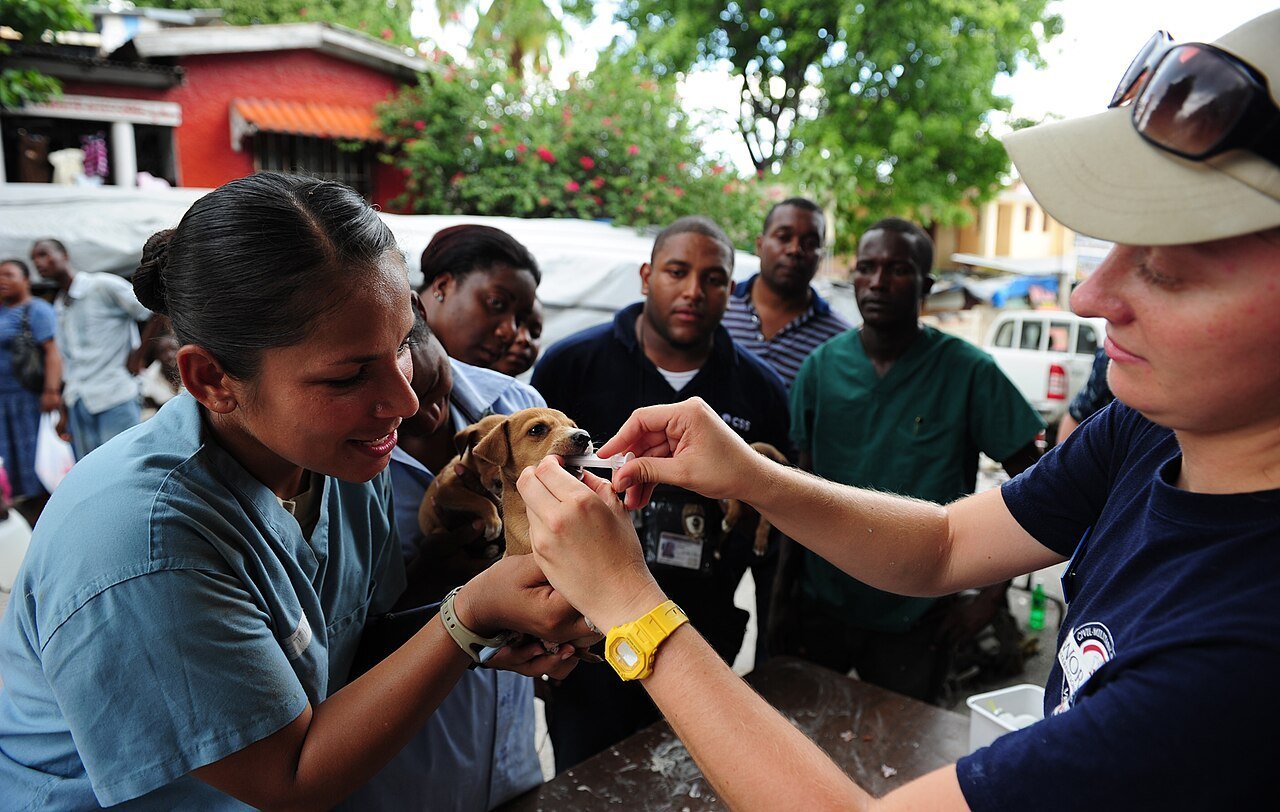
Which dewormer does my puppy need?
That’s a question for your vet, since products differ in which worms they cover and how they’re dosed. CAPC’s roundworm guidelines mention pyrantel for treating young puppies. Some vets use fenbendazole (sold as Panacur) or a combination product, depending on the worms they’re targeting and your puppy’s age and weight.
A few cautions:
- Dose by weight. Puppies grow fast, so the right dose changes from week to week. Weigh your puppy before each dose.
- Not all worms are the same. Tapeworms, whipworms and protozoa like *Giardia* and coccidia often need different medicines than roundworms and hookworms.
- Skip guesswork. Don’t buy a random over-the-counter product and hope it covers everything.
What about heartworm prevention?
Heartworm is a different parasite, spread by mosquitoes rather than swallowed. Many US vets start puppies on a monthly heartworm preventive at around 8 weeks. Most of these products also control roundworms and hookworms, which is why CAPC recommends year-round, broad-spectrum parasite control. CAPC’s general guidelines also call for an annual heartworm test in dogs. See our puppy heartworm prevention guide for more.
Why does my vet want a stool sample?
A dewormer treats the worms it covers. A fecal test shows what’s actually there, including parasites that a routine dewormer may miss. CAPC recommends fecal exams at least four times during the first year, because young animals are more susceptible to parasites. Healthy adult dogs should be tested at least twice a year.
To collect a sample, use a clean bag to pick up a fresh stool, ideally less than 12 hours old, and keep it sealed and cool until the visit.

What should I expect after deworming my puppy?
Most puppies have no side effects at all. Some have mild, short-lived stomach upset, such as softer stool or vomiting once. You may also see worms in your puppy’s poop for a day or two after a dose. That can look alarming, but it usually means the medicine is working.
Call your vet if your puppy:
- Vomits more than once or can’t keep food down
- Has diarrhea that lasts more than a day or contains blood
- Seems weak, very tired or has pale gums
- Has a bloated belly or isn’t gaining weight
These signs can point to a heavy worm burden, but they also overlap with serious illnesses like parvovirus. Our guide to parvo symptoms in puppies explains what to watch for.
Can I get worms from my puppy?
Some dog worms can infect people, especially young children who play in dirt or sandboxes and put their hands in their mouths. CAPC notes that roundworm eggs can survive in soil for years. Protect your family with a few simple habits:
- Pick up your puppy’s poop right away, at least daily.
- Wash hands after handling your puppy, picking up poop or gardening.
- Keep kids’ sandboxes covered.
- Stick to your puppy’s deworming and prevention schedule.

How does deworming fit with vaccines?
Deworming and vaccines often happen at the same visits, which makes it easy to keep on track. Puppies usually see the vet every few weeks until they finish their vaccine series at around 16 weeks or older. Our puppy vaccination schedule shows how those visits line up.
Keep a simple record of every dose: the date, the product and your puppy’s weight. A phone note or a photo of the vet receipt works fine. It makes life much easier when you switch vets, board your puppy or sign up for puppy classes.
Frequently asked questions
What is puppy deworming schedule?
It’s the plan for giving dewormer to young puppies at set ages. Under CAPC guidelines, that’s every two weeks at 2, 4, 6 and 8 weeks old, then a monthly parasite preventive that works against intestinal worms. If your puppy came home older or missed doses, your vet will set a catch-up plan.
How many rounds of deworming do puppies need?
Most puppies get at least four doses in the first 8 weeks, often started by the breeder or shelter. After that, many US vets switch to a monthly heartworm preventive that also controls roundworms and hookworms. Extra rounds may be needed if a fecal test finds worms.
How often is deworming for puppies?
Every two weeks from 2 to 8 weeks of age, then monthly with a broad-spectrum preventive. Your vet may adjust this based on fecal results, the product they use and where you live.
What is the worming schedule for puppies?
The worming schedule is the same as the deworming schedule: doses at 2, 4, 6 and 8 weeks, then monthly prevention. Fecal tests at least four times in the first year, and then at least twice a year in adulthood, help confirm the plan is working.
Vet note: This article is general information and is not a substitute for advice from your own veterinarian. If your puppy is having trouble breathing, collapses, has a seizure or may have eaten something toxic, call your vet or the nearest emergency animal hospital right away. ASPCA Animal Poison Control: 888-426-4435 (a fee may apply).
