
A Belgian Malinois puppy is a bundle of brains, speed and energy. This is the breed police and military teams around the world rely on, and for good reason. But the same drive that makes a Malinois brilliant at work can make a puppy a real handful in an ordinary home.
This guide covers everything you need to know before you bring a Belgian Malinois puppy home: where the breed comes from, size and growth, temperament, training, exercise, feeding, grooming, health, cost and how to find a responsible breeder or rescue. We’ll also be honest about who this breed suits and who it doesn’t.

Belgian Malinois at a glance
These figures come from the AKC Belgian Malinois breed page:
| Trait | Details |
|---|---|
| Breed group | Herding |
| Height | 24 to 26 inches (males), 22 to 24 inches (females) |
| Weight | 60 to 80 pounds (males), 40 to 60 pounds (females) |
| Life expectancy | 14 to 16 years |
| Coat | Short, straight and weather resistant |
| Standard colors | Fawn and mahogany, with a black mask |
| Energy level | Very high |
| Good for first time owners | Generally no |
Where the Belgian Malinois comes from
The Malinois (pronounced “mal in wah”) takes its name from the city of Malines in Belgium, where it was developed as a herding dog. The AKC’s Malinois facts article explains that it is one of four Belgian herding breeds. The others are the Belgian Tervuren, the Belgian Laekenois and the Belgian Sheepdog.
In some countries, these four are treated as varieties of one breed. The FCI, for example, lists them under the Belgian Shepherd Dog, while the AKC registers them separately. The AKC recognized the Malinois as its own breed in 1959.

Although it started out on farms, the Malinois has become one of the breeds most often chosen by police departments and military working dog programs. Many dogs on elite U.S. Navy SEAL teams are Malinois, including Cairo, the dog who took part in the 2011 raid on Osama bin Laden’s compound.
Malinois vs German Shepherd
People often confuse Malinois puppies with German Shepherd puppies. They do look alike, especially when young. The main differences are:
- Build. The Malinois is usually lighter, leaner and more square in shape.
- Coat. Malinois have a short coat, while many German Shepherds have a longer, thicker one.
- Energy. Both are working breeds, but the Malinois is famous for an even higher drive and intensity.
What a Belgian Malinois puppy looks like
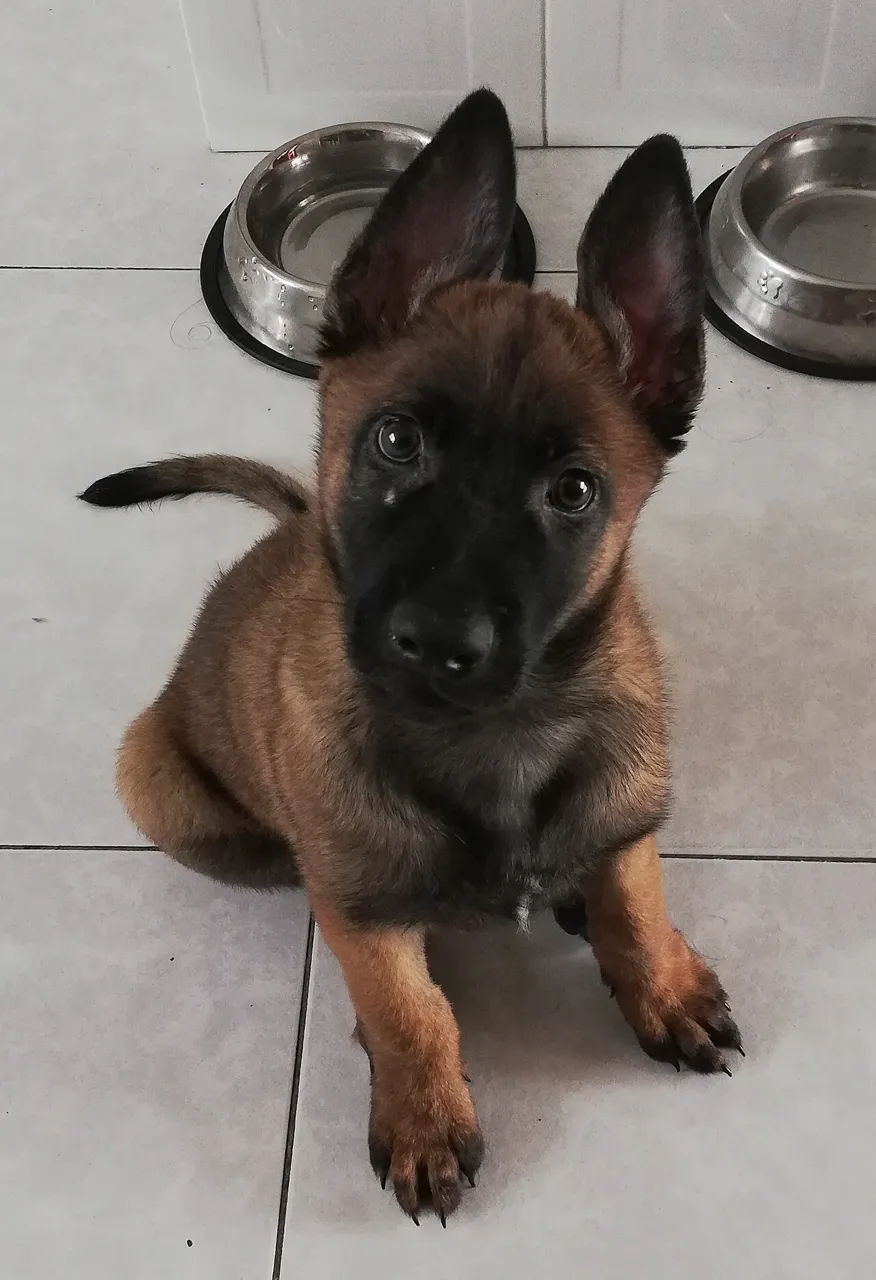
Malinois puppies are often born darker and lighten as they grow. You’ll usually see a fawn or mahogany body with a black mask on the face and black ears. Their ears may flop at first and stand up over the first months, though the timing varies from puppy to puppy.
Black and brindle Malinois puppies
You may see puppies advertised as “black Malinois” or “brindle Malinois.” The AKC breed standard only lists fawn and mahogany as standard colors. Dogs in other colors may come from working lines, from other Belgian Shepherd varieties, or may be mixes with other breeds. If color matters to you, ask the breeder for registration papers and a clear explanation of the puppy’s parents.
Belgian Malinois puppy temperament
A Malinois puppy is smart, alert, quick to learn and very attached to its people. These dogs were bred to work closely with a handler all day, so they want a job and a partner.
Common traits include:
- High drive. Malinois love to chase, tug, bite toys and work for rewards.
- Intelligence. They learn fast, which includes learning bad habits fast.
- Mouthiness. Puppies are often very mouthy and may nip at hands, feet and clothing.
- Sensitivity. Many are sensitive to their handler’s mood and respond best to calm, clear, fair training.
- Protectiveness. They tend to be watchful and can be wary of strangers without good socialization.

Are Belgian Malinois good family dogs?
They can be, in the right family. A well raised Malinois can be loving and loyal at home. But the AKC notes that the breed is generally not a good fit for first time owners. A Malinois needs an experienced, active owner with time for daily training and exercise. Without it, they can become frustrated and destructive.
Their herding instinct may lead them to chase or nip at running children. Always supervise young kids with any puppy, and teach children how to behave calmly around dogs.
Is a Malinois puppy right for you?
Ask yourself these questions honestly before you commit:
- Can you give at least a couple of hours of active exercise and training every day for many years?
- Do you enjoy training, and are you willing to work with a professional trainer?
- Do you have a secure, fenced yard?
- Are you prepared to manage a mouthy, energetic puppy for many months?
- Will someone be home for much of the day, or can you arrange dog daycare or a walker?
If most of your answers are no, a calmer breed may be a better match. Browse our large puppy breeds guide, or compare family favorites in Labrador vs Golden Retriever puppies.

Finding a Belgian Malinois puppy
Choosing a breeder
A good breeder is especially important for a working breed like the Malinois. Look for a breeder who:
- Health tests both parents and shares the results. The Orthopedic Foundation for Animals (OFA) keeps public records of hip and elbow evaluations and other tests.
- Lets you meet at least the mother, and ideally both parents
- Asks you lots of questions about your lifestyle and experience
- Matches puppies to homes based on temperament, not just a waiting list
- Raises puppies in the home with early handling and new experiences
- Offers a contract and will take the dog back at any point in its life
Ask whether the parents come from show lines, working lines or a mix. Working line puppies are often even more intense and are usually best suited to experienced sport or working homes.
Adopting a Malinois
Many Malinois end up in rescue because owners underestimated the breed. Breed specific rescues and general shelters often have Malinois and Malinois mixes. An adult rescue whose temperament is already known can be a great choice for the right home. Be wary of “free Malinois puppies” online, which can be a sign of a scam or an unplanned litter with no health testing.
How much does a Belgian Malinois puppy cost?
Prices vary a lot depending on location, bloodlines, health testing and whether the puppy comes from show or working lines. Puppies from health tested parents with proven temperaments usually cost more, and that cost is worth it. Adoption fees are usually much lower.
Don’t forget ongoing costs like food, vet care, insurance, training classes, crates, toys and equipment. Our guide on how much a puppy costs breaks down what to budget for in the first year.

Bringing your Malinois puppy home
Prepare before your puppy arrives:
- A sturdy crate sized for a large adult dog, with a divider for now
- Durable chew toys and tug toys
- A martingale or flat collar, harness and leash
- High quality large breed puppy food
- Baby gates and a playpen
- An appointment with your vet in the first week
Crate training is a big help with a busy Malinois puppy. It gives them a safe space to rest and helps with house training. Follow our step by step crate training guide.
Training a Belgian Malinois puppy
Training is the most important part of owning a Malinois. Start the day your puppy comes home.
Start with the basics
Teach name recognition, sit, down, come and leave it using rewards like food, toys and play. Keep sessions short, a few minutes at a time, several times a day. Our puppy training pillar covers the basics in detail.
Teach calm as well as action
A Malinois doesn’t need help being active. It needs help switching off. Reward calm behavior, practice settling on a mat, and build in nap times. Many Malinois puppies get overtired and bitey if they don’t get enough rest.

Manage the mouth
Malinois puppies are often very mouthy. Redirect biting to tug toys, stop play when teeth touch skin, and never encourage your puppy to bite hands or clothes. See our guide on how to stop puppy biting for practical steps.
Socialize carefully
Introduce your puppy to many people, places, sounds, surfaces and calm dogs during the early weeks, keeping each experience positive. Good socialization helps a watchful breed grow up confident rather than suspicious. Our guide on how to socialize a puppy explains how to do it safely before vaccines are complete.
Work with a professional
A trainer who understands working breeds can be a huge help. Look for one who uses reward based methods. Harsh methods can damage your relationship with a sensitive breed and make problems worse.

Exercise and mental stimulation
An adult Malinois needs a lot of activity. But puppies need care, because their bones and joints are still growing. Short play sessions, sniff walks and training games are better than long runs or repetitive jumping for a young puppy. Ask your vet when it’s safe to start more intense exercise.
Mental exercise matters just as much. Try:
- Puzzle feeders and stuffed chew toys
- Scent games, like hiding treats for your puppy to find
- Short training sessions throughout the day
- Tug games with clear start and stop rules
As your Malinois matures, dog sports like obedience, agility, tracking, herding, scent work and protection sports give this breed the job it craves.

Feeding a Belgian Malinois puppy
Feed a complete and balanced puppy food suitable for large breed puppies. These foods are designed to support steady, controlled growth. Split daily food into three or four meals for young puppies, then move to two meals as they grow. Our puppy feeding schedule and how much to feed a puppy guides can help, but your vet can give advice for your individual puppy.
Use part of your puppy’s daily food for training rewards so you don’t overfeed. Keep your puppy lean, as extra weight puts strain on growing joints.
Grooming
The Malinois coat is short and easy to care for. Brush weekly to remove loose hair, and more often during seasonal shedding. Trim nails regularly, check ears, and start brushing teeth early. Bathe only when your dog is dirty.
Belgian Malinois health
The Malinois is generally a healthy breed with a long life expectancy. Like many breeds, though, it can be affected by certain conditions. Ask your breeder about testing for:
- Hip and elbow dysplasia, which affect the joints
- Eye conditions, such as progressive retinal atrophy and cataracts
- Other concerns that your breeder or vet may mention, such as epilepsy or hypothyroidism
Keep up with vaccines, parasite prevention and regular checkups. Follow our puppy vaccine schedule and see your vet if anything seems off.

How big will a Malinois puppy get?
Male Malinois typically grow to 24 to 26 inches and 60 to 80 pounds, while females are usually 22 to 24 inches and 40 to 60 pounds. Most reach close to their adult height in their first year but may keep filling out after that. Track growth with our puppy growth chart and read when do puppies stop growing.
Frequently asked questions
Are Belgian Malinois puppies hard to train?
They learn very quickly, but their energy, drive and mouthiness make them hard work. They do best with experienced owners who enjoy training every day.
Do Belgian Malinois bark a lot?
They can be vocal, especially when bored, excited or alerting to something. Plenty of exercise, mental work and training help keep barking under control.
How long do Belgian Malinois live?
The AKC lists a life expectancy of 14 to 16 years.
Are Belgian Malinois good with kids?
They can be with good training and socialization, but their herding instincts may lead them to chase or nip. Always supervise children and puppies together.
Can a Belgian Malinois live in an apartment?
It’s possible, but difficult. They need a lot of daily exercise and mental stimulation. A home with a secure yard and an active owner is a much better fit.
Do Belgian Malinois shed?
Yes. They have a short double coat that sheds, more heavily at certain times of the year. Weekly brushing helps.
What is the difference between a Malinois and other Belgian Shepherds?
They share a common origin. The main differences are coat type and color. The Malinois is short coated and fawn to mahogany, the Belgian Sheepdog is long coated and black, the Tervuren is long coated and fawn to mahogany, and the Laekenois has a rough, wiry coat.
The bottom line
A Belgian Malinois puppy can grow into an incredible companion and working partner, but this breed asks a lot of its owners. If you have the time, experience and energy to train, exercise and challenge a Malinois every day, you’ll have a loyal, clever and devoted dog. If not, consider a calmer breed from our puppy breeds guide, or compare other big breeds such as the Boxer puppy and the Cane Corso.
Photo credits
- Eight week old fawn Belgian Malinois puppy standing in a dirt yard: Photo: Joshbrandon at English Wikipedia / Wikimedia Commons, Public domain
- Three month old Belgian Malinois puppy with a dark mask sitting by food bowls: Photo: MiguelAlanCS / Wikimedia Commons, CC BY-SA 4.0
- Four Belgian Shepherd varieties side by side: Groenendael, Tervuren, Malinois and Laekenois: Photo: Various, see description. Compiled by User:Adventurous36 / Wikimedia Commons, CC BY-SA 4.0
- Two Belgian Malinois puppies playing together on a white floor: Photo: Linda Hosek / Wikimedia Commons, Public domain
- Breeding program worker sitting on the floor with a litter of Malinois puppies: Photo: Linda Hosek / Wikimedia Commons, Public domain
- Young Belgian Malinois puppy lying in long grass: Photo: Roberta F. / Wikimedia Commons, CC BY-SA 3.0
- Woman holding a Belgian Malinois puppy close to her face: Photo: Linda Hosek / Wikimedia Commons, Public domain
- Belgian Malinois jumping over an agility hurdle during a competition: Photo: A. Buser / Wikimedia Commons, CC BY-SA 3.0 ch
- Handler sitting with a Belgian Malinois detection dog in a field: Photo: USDAgov / Wikimedia Commons, Public domain
- Adult male Belgian Malinois standing on grass: Photo: Flickr user intrepidmalinois "MALINUTS" / Wikimedia Commons, CC BY 2.0


